


 RSS Feed
 Email
 Twitter
 Facebook
Why Are Food Prices So High?
 Twitter
 Facebook
 Delicious
 Digg
 Stumble
 Reddit
Food prices have skyrocketed over the past couple years. While overall U.S. food prices rose about 5% last year, earlier in the year food inflation was the highest recorded in 36 years. The USDA sees food prices rising 2.5%-3.5% in 2012 but many believe that inflation could be much higher. This is concerning since the economy is not rocketing and interest rates are near zero. Why are food prices so high?
Historically, food was a local issue as supply chains were short. Food supply and demand were largely functions of local crop conditions impacted by weather, growing conditions, pests, etc. Over the past century, supply chains and preservation have improved so that the food trade has become international. Commodities, crops, and finished goods are traded globally. This trade has stabilized prices when local weather or growing conditions are impacted. But rising populations, largely in Asia, have created demand for crops and finished good from other parts of the world, and have impacted prices.
As every student of economics knows, price is a function of supply and demand. When demand for a commodity rises on constant supply, prices usually rise. Conversely, when demand falls at constant supply, prices usually fall. The same thing works with supply. Rising supply on constant demand causes a fall in prices while falling supply on constant demand causes prices to increase. So one could conclude that rising food prices have been caused by falling supply or increased demand. This is true, but there is a lot going on behind the scenes causing this.
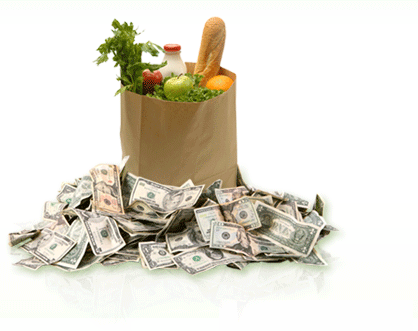
What’s going on?
1) China and India have the largest and fastest growing populations creating demand for food from around the world. So one impact on prices has been rising demand from these countries, especially China.
2) The Japanese tsunami and earthquake last year drove up seafood prices by nearly 6%.
3) Vegetable prices rose 50% in the past month. Crop damage in Australia, Russia, and South America are to blame.
4) Government subsidized and mandated ethanol use has increased the demand for corn and reduced acreage dedicated to food thereby pushing food prices up. A Congressional Budget Office report concluded that the increased use of ethanol accounts for 10-15% of the increase in food prices.
5) Changes in government subsidies for crops other than corn for ethanol impact food prices.
6) Regulations restricting use of herbicides, pesticides, fertilizers, etc., while positive on some fronts, may result in poorer crop yields.
7) Increased oil prices drive up costs for transportation, fertilizer, plastic packaging and inks used to print packaging.
8) In some areas of the U.S., the government is paying farmers not to plant to save water. This reduces food supply.
9) Drier and hotter weather trends in farming areas generally reduce crop yield and drive prices higher.
10) Import tariffs and export taxes distort supply and demand, and hence food prices around the world.
The interaction of different commodity prices also is interesting. For instance, the demand for corn and soybeans in China has pushed up the prices of eggs here in the U.S. The grain costs account for about half of the 23% rise in egg prices last year. The balance of the cost increase is due to fewer laying hens. The rising costs of grain for feedstock have increased prices on beef and pork. Advanced Economic Solutions, an economic research firm has predicted that beef prices will rise 12% in 2012.
Food manufacturers are doing everything they can to cut costs and avoid price increases. These aggravate retailers who bear the cost of changing the pricing throughout their system and negatively affect consumer volume. As a result, many manufacturers who held off on increases have needed to take larger increases than normal to catch up resulting in sticker shock. For example, Kraft Foods raised prices 7.6% worldwide in the last quarter of 2011.
Some people think that rising food prices are a good sign because historically this has meant the economy is recovering. But that isn’t necessarily true anymore. Rising prices in the U.S. are
less driven by the economy here and more driven by the economic recovery and growth elsewhere. The result is a slowly recovering economy in the U.S. but higher inflation than usual. This, in turn, could require the Federal Reserve to take action to stem rising inflation by raising interest rates, and that could stagnate economic growth. This kind of situation with low economic growth, high unemployment, and rising prices is called “stagflation” and was last seen here in the late 1970s.
Impacts from weather and natural disasters will ebb and flow over time and population growth will continue. But policy changes like ending ethanol subsidies, eliminating or moderating other crop subsidies, moderating regulation on herbicide use, eliminating food tariffs/taxes, allowing more water use for agriculture, etc. all could help lower food costs. Finally, actions to lower oil prices could help food inflation.
It seems likely that, given all these factors, food price inflation will continue in 2012. This, on top of rising gas price, will hurt the American consumer and may play a role in the upcoming election.
– Steve Odland
Incoming search terms:
- food prices
- food cost
- why are food prices so high
- COST OF FOOD
- food price
- price of food
- high food prices
- food costs
- why are food prices going so high ?
- why are egg prices so high 2014