


 RSS Feed
 Email
 Twitter
 Facebook
What is the Future of Agriculture in India?
 Twitter
 Facebook
 Delicious
 Digg
 Stumble
 Reddit
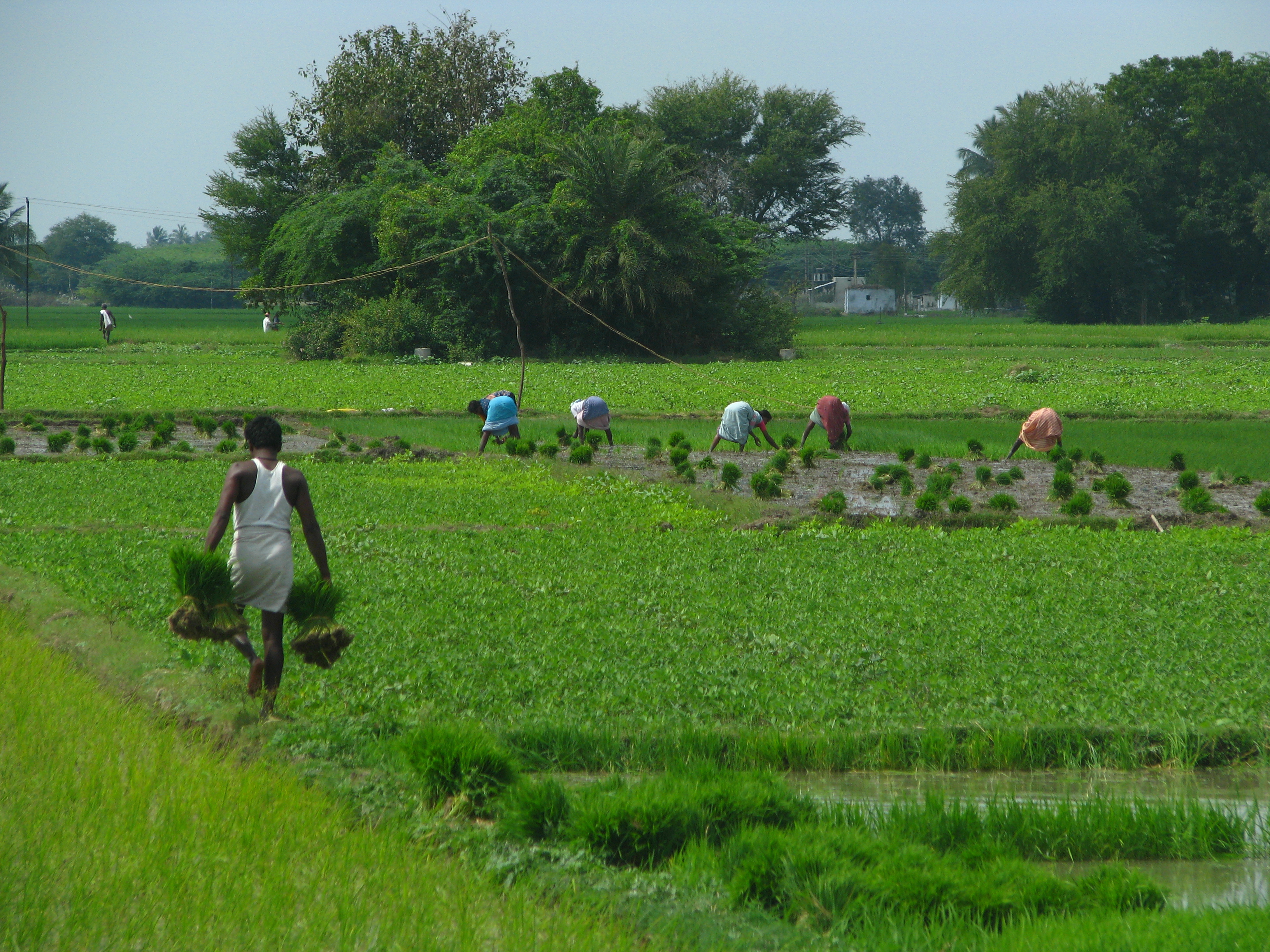 The stark observation made in the Economic Survey of 2015-16 that “Indian agriculture, is in a way, a victim of its own past success – especially the green revolution”, shows the dark reality of the agriculture sector at present and the havoc that has been wreaked by the green revolution.
The green revolution, which is often characterised by the introduction of high-yielding variety of seeds and fertilisers, undoubtedly increased the productivity of land considerably. But the growth in the productivity has been stagnant in recent years, resulting in a significant decline in the income of farmers. There have also been negative environmental effects in the form of depleting water table, emission of greenhouse gases, and the contamination of surface and ground water. Needless to say, the agriculture sector is in a state of distress, which is severely affecting peasants and marginal farmers, and urgent policy interventions are required to protect their interests.
The government has responded to the problem by constituting a panel, which will recommend ways to double the income of farmers by 2022. While this may be an overtly ambitious target, if we want to boost stagnated agricultural growth a shift has to be made, as finance minister Arun Jaitley said in parliament, from food security of the nation to income security of the farmers. However, there are many hurdles that have to be crossed if we want to achieve this objective.
Rainbow revolution holds the key
The first major barrier to overcome is declining productivity. Data from 2013 reveals that India’s average yield of cereal per hectare is far less than that of many countries (including several low income countries), but the difference is huge when compared to China. For instance, our average yield per hectare is 39% below than that of China and for rice this figure is 46%. Even Bangladesh, Vietnam and Indonesia fare better than India in case of rice yield. Further, there is a huge inter-regional variation; the wheat and rice yield from Haryana and Punjab is much higher than from the other states.
In order to cross the declining productivity barrier there is a need to herald a rainbow revolution by making a shift from wheat-rice cycle to other cereals and pulses. Since wheat and rice coupled with other crops are backed by minimum support prices (MSP) and input subsidy (whether water, fertiliser or power) regime, there is a huge incentive for the farmers in the irrigated region of Northwest India to grow these crops.
These crops are not only input intensive, but also have negative environmental consequences in the form of depleting water table and the emission of green house gases. The policy response to this problem has always been to disincentivise farmers from growing these crops by making meagre enhancements in the MSP. However, this is not sufficient and has to be complemented with huge investment in public infrastructure. For example, due to the rice milling industry in Haryana and Punjab, there is now a proper established market in place for different varieties of rice that also incentivises farmers to cultivate paddy. Until such a marketplace is not created for other cereals and pulses, farmers are unlikely to make a shift to cereals and pulses.
Per drop more crop
The second major barrier is the scarcity of two major resources for agriculture – cultivable land and water. While the cultivable land per person is declining because of the fragmentation of farms due to rising population, India also has much less per capita water as compared to other leading agrarian countries. This problem exacerbated because India has been exporting virtual water embedded in crops, which is marked by its feature of non-replenishment. Once it is exported, it cannot be recovered. According to a report by Prashant Goswami and Shiv Narayan Nishad, in 2010, India exported about 25 cu km of water embedded in its agriculture exports, which is about 1% of the available water every year.
Given this scenario, it is time to make a shift to micro irrigation so that the efficient and judicious use of scarce water resources can be made. A study conducted by the National Mission for Sustainable Agriculture on micro irrigation in 64 districts of 13 states (Andhra Pradesh, Bihar, Chhattisgarh, Gujarat, Haryana, Karnataka, Maharashtra, Odisha, Rajasthan, Tamil Nadu, Sikkim, Uttar Pradesh and Uttarakhand), reveals that there were significant reductions in the use of water and fertiliser but the yield of crops increased up to 45% in wheat, 20% in gram and 40% in soybean. However, high initial costs deter farmers to adopt this technology. While big farmers can easily avail this technology, the government should consider giving subsidies to small farmers to boost the adoption of this technology.
Further, as A. Vaidyanathan notes, due to populist politics charges, the prices of electricity and diesel oil are far below the actual cost and hence there is over exploitation of groundwater. While Vaidyanathan recommends water charging at actual costs, this may be not possible in the present scenario because of the sensitive nature of the issue and also because of its direct bearing on farm productivity and farmers’ income.
Opening up of the markets
The National Agricultural Policy of 2000 stated that private sector participation will be promoted through contract farming and land leasing arrangements to allow accelerated technology transfer, capital inflow and assured market for crop production. However, there has not been any significant participation by the private sector in agriculture.
One of the major factors that has deterred private players from entering the agricultural sector is the long pending reform of wholesale markets, which are regulated by the Agriculture Produce Management Committee (APMC) Act. The AMPC forces the farmers to sell their produce in government-controlled marketing yards. While the objective of APMC was to regulate markets and increase market yards, it has acted as a major obstacle to private investment.
In 2003, however, the central government mooted a model APMC, but as noted by the task force on agriculture constituted by NITI Aayog, this has not been implemented by many states in east India. Therefore, to increase private sector participation in agriculture, it is imperative to remove these entry barriers.
Further, although the government has launched the National Agriculture Market, which provides farmers an electronic medium to sell their produce anywhere in India, it is yet to be seen whether farmers can actually derive benefits from this platform.
R&D is the future
One of the major barriers to boosting farm productivity is the lack of new technologies and major breakthroughs. While the National Agriculture Research System played a major role in the green revolution, in recent years there hasn’t been any major breakthrough in research. One of the main reasons for this is the lack of financial resources.
If we compare the data of the percentage of agricultural GDP spending on research and development in Asia, then the figures are revealing. While India spent 31% of its agricultural GDP on research and development in 2010, in the same year China spent almost double than amount. Even our neighbour Bangladesh spent 38% of its agricultural GDP on research and development in that year. As a result of this resource crunch there has not been diffusion of new agricultural innovations and practices that is critical for enhancing farm productivity.
Further, there is a lack of interest of students in pursuing research in agriculture. As the Economic Survey notes, even in states where agriculture is relatively more important (as measured by their share of agriculture in state GDP), agriculture education is especially weak if measured by the number of students enrolled in agricultural universities. There has also not been any major contribution from the private sector towards research and development. Government should thus woo private players by giving them incentives to play a major role in agricultural research and development.
Many have cast doubts over the ambition of government to double the income of farmers by 2022. As Ashok Gulati, former chairman of Commission for Agricultural Costs and Prices notes, doubling of real incomes of farmers would be a “miracle of miracles”, as it would imply a compound growth rate of 12% per annum.
Further, IndiaSpend is also skeptical of government ambition as their analysis shows that after adjusting for rising costs, an Indian farmer’s income effectively rose only 5% per year over a decade (2003-2013). All this, in many ways, paints a bleak picture of future of Indian agriculture. If we however want to save the future of our farmers and permanently cure the ills of Indian agriculture, major policy interventions have to be made at the earliest.
Source: thewire.in