


 RSS Feed
 Email
 Twitter
 Facebook
The new yuppies: how to build a new generation of tech-savvy farmers
 Twitter
 Facebook
 Delicious
 Digg
 Stumble
 Reddit
 As farmers age around the globe – I estimate that the average age is 55 – we need to make sure that young people see the food system as a viable career option. These farmers are the future of food. They can help to mitigate and potentially reverse climate change, curb unemployment and provide more nutrient-dense crops to the world.
Unfortunately, farming is usually seen as a last-resort profession. Rural youth migrate to cities in search of employment, and lack of infrastructure and education leads to poverty and malnutrition. But investing in young agricultural leaders has the power to transform the entire food system. Government leaders, businesses, and farmers groups need to make agriculture something youth want to do, not something they feel forced to do.
Climate change presents complex challenges for farmers of all ages, but youth are eager to use technology to access community-driven networks that harness knowledge to help. The Agroecological Intensification Exchange, for example, connects online users to innovations all over the world.
Agroecological intensification aims at improving productivity and efficiency through better farm management, improved stability and diversity of yields and enhanced use of local resources. The site’s database, with case studies and research on topics from crop ecology to disease management, is a resource for practitioners and researchers in developing countries seeking to improve agricultural systems and adapt to the changing climate.
Networks with an explicit focus on youth are also crucial. The Global Forum on Agricultural Research and the Young Professionals for Agricultural Development (Ypard) are focusing on cultivating the next generation of farmers, researchers, scientists, agronomists and policymakers.
Ypard has grown into a network of more than 4,500 members in 117 countries and young professionals share innovations and learn from farmers and researchers in other parts of the world. Ypard involves youth in critical conversations about agricultural research and policy including the United Nations Framework Convention on Climate Change (UNFCCC) negotiations and other important meetings where youth typically don’t have a voice.
Youth unemployment rates are on the rise in many developing countries – today, some 4.5 million youth around the globe are unemployed. But increasing the appeal of professions in agriculture can help solve this economic problem – creating social stability and food security. For farming to attract youth, it must become more profitable.
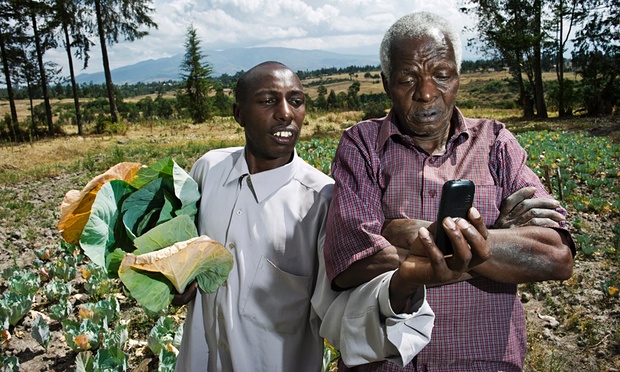
Luckily, the development of agriculture-focused cell phone applications is transforming the way people run their farms: sub-Saharan Africa has more 650 million cell phone subscribers, and the number is growing. Tigo Kilimo in Tanzania and Mobile Agribiz in the Democratic Republic of Congo provide small-scale farmers with crucial weather information and agricultural tips. And SokoniSMS64 in Kenya sends farmers texts with accurate market prices from around the country, helping them negotiate with traders and connect to markets. Access to this information can help farmers make the right decisions about what to plant and who to sell to – decisions that make a big difference about whether a harvest is profitable.
Achieving food security and combating malnutrition in the developing world also depends on improving the nutrient density of the crops. The International Fund for Agricultural Development (Ifad) emphasizes that while increasing productivity and profitability are important, improving nutrition requires more attention. This can be achieved, in part, through changes in practices – including better storage, preservation and processing.
And instead of growing starchy staples, young farmers are diversifying crop production to increase nutrition and incomes. Developing Innovations in School Cultivation, or Project Disc, in Uganda, is working with nursery school to high school students to develop a better appreciation – and taste – for indigenous foods. Edie Mukiibi, the project’s co-founder and now vice president of Slow Food International, says that “if a person doesn’t know how to grow food, they don’t know how to eat”. By working with schools to get students excited about indigenous plants, cooking, and preserving foods, Project Disc is instilling a positive perception of farming and lifelong knowledge about nutrition.
Empowering youth in developing countries to bring their energy to the agricultural sector is an ongoing effort. This effort must begin again with each new generation to help nourish both people and the planet. And it requires the support of policymakers, consumers, and innovators worldwide – the future of food depends on it.
Source: theguardian