


 RSS Feed
 Email
 Twitter
 Facebook
Higher tariff for private solar plants likely
 Twitter
 Facebook
 Delicious
 Digg
 Stumble
 Reddit
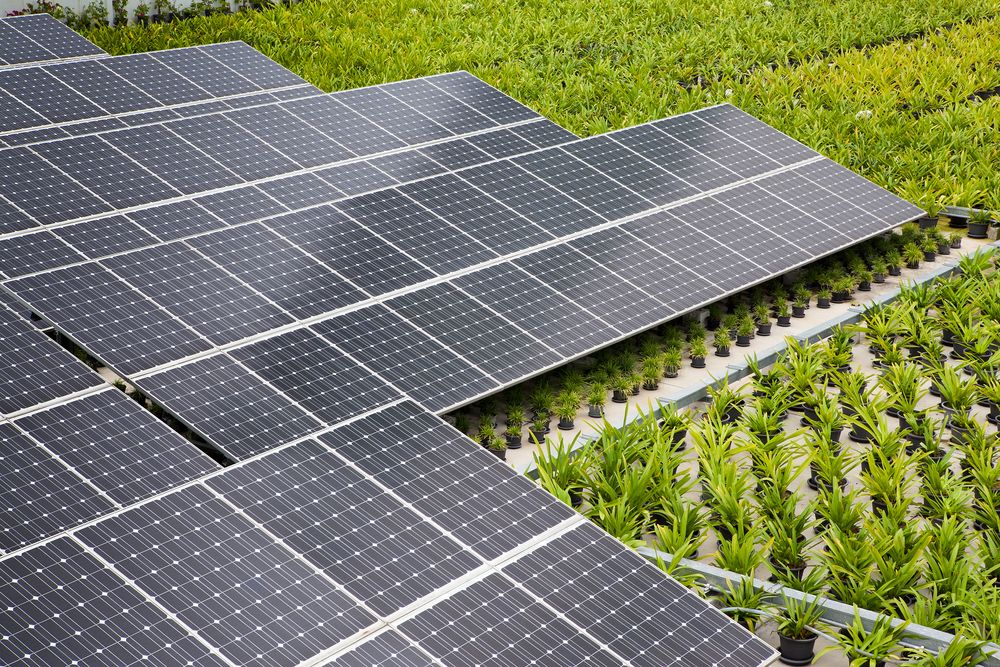 ISLAMABAD: The National Electric Power Regulatory Authority (Nepra) has approved power purchases from private renewable energy firms at rates that are at least 25 per cent higher than the upfront tariff announced only three months ago.
The power regulator had announced its revised upfront tariff for solar power plants on December 16, 2015, to reflect the declining prices of solar technology in the international market, at the federal government’s request. This tariff will expire on June 30, 2016.
Consequently, Nepra set a revised tariff ranging between 10.72 cents per kilowatt hour (kWh) and 11.53 cents kWh in December 2015, effectively superseding the previous rate — 16-17 cents per kWh.
However, the regulator has been approving upfront tariffs for solar plants at 14.4 to 15.8 cents per kWh, and instructed the government to notify these revised rates in the official gazette. This surprised the Ministry of Water and Power which has not been on good terms with the regulator due to a number of issues.
The ministry is reported to have decided to take up the matter at the highest level since it involves hundreds of billions of rupees over the 25 to 30-year lives of these renewable projects, which will come out of consumers’ pockets through their monthly electricity bills.
An official explained that a 10 paisa per unit difference over one megawatt involved an extra burden of Rs1.2 billion over 25 years, after accounting for all outages and other factors. He extrapolated that the extra burden could exceed Rs100bn.
Revised rates issued for three companies in February; regulator denies issuing new orders even as ministry confirms receipt
In a written reply to Dawn, a Nepra spokesperson denied that the regulator had approved higher tariff for any solar power company in spite of the notification of the upfront tariff.
When asked to explain why Nepra was approving higher tariff for solar projects despite a significantly lower tariff having been announced in December 2015, spokesperson Aysha Tasadduq replied: “There is nothing like that. Some companies have filed reviews against the lower tariff but it is yet to be decided. We only approve the upfront tariff as determined by the authority (Nepra).”
Interestingly, Nepra did not put these revised orders on its website, as has been past practice.
But official records, seen by Dawn, suggest that the regulator had, in fact, approved higher rates for at least three companies in the last week of February.
In its order dated February 29, 2016, the regulator said it had approved upfront tariff for the 10MW Safe Solar Power and the 10MW Buksh Solar in April-May 2014, and for Blue Star in October 2014, with a deadline to achieve financial close by March 2015, which was later extended to December 31, 2015 due to resistance by the Central Power Purchase Agency (CPPA), and other reasons.
The three firms applied for ‘unconditional acceptance of January 2015 upfront tariff’ on November 23 and December 28. The order also said that the CPPA had consented to give upfront tariff 2015 to the companies which had opted for upfront tariff 2014 and had not yet achieved financial close.
“Considering the unconditional application… for revised tariff, tariff approvals in similar cases and CPPA consent, the authority has decided to accept the unconditional application for revised tariff and decided to approve the upfront solar tariff dated 2015 in lieu” of upfront tariff 2014, Nepra wrote in three separate orders sent to the Ministry of Water and Power for notification in the official gazette.
As such, it set the upfront tariff for Buksh Solar and Safe Solar at 14.4 cents (Rs15.13) per unit and 15.03 cents (Rs15.8) for Blue Star.
The record also indicates that these companies had been allowed higher tariff (in the 16-17 cent range) more than a year ago, but applied for the acceptance of their demanded tariff after the revised rates were notified, days before the previous deadline expired.
Zafaryab Khan, spokesperson for the Ministry of Water and Power, confirmed receipt of the fresh orders regarding these three companies from Nepra. “The ministry will not notify these revised tariffs,” he insisted, saying that they could not burden consumers with higher tariffs when a lower tariff is already available.
He explained that between January and December 2015, Nepra had issued varying tariffs — between Rs14 and Rs17 per unit —which were scaled down to Rs10-11 per unit in December 2015, well before these companies swung into action and asked the previous tariff to be accepted.
Source: Dawn