

Greenhouse full of sugarcane seedlings
Greenhouse full of sugarcane seedlings
Each year, at the USDA Sugarcane Research Unit in Houma, we grow sugarcane seedlings from true seed resulting from crosses made during the winter.
True seed of sugarcane has a shape similar to that of sesame seed but is much smaller, about the length of the commas in this sentence, which helps explain why sugarcane is not sexually propagated on farms and plantations. After about a month of careful nurturing, tiny seedlings can be transplanted to 72-cell trays, which you see in the photo above, taken yesterday. We transplant around 90,000 to 100,000 seedlings each year. This year, beginning on Apr 22, we will start transplanting these seedlings to the field.
The field transplanting operation will take about a week to complete. Seedlings will be planted 16″ apart on 6′ wide rows. They will be cut back at the end of the year, then will begin to re-grow next spring. Those that cannot survive a Louisiana winter will cull themselves out. In the fall of 2011, the top 10% of surviving seedlings will be selected and be asexually propagated into the 2nd stage of selection.
They will undergo additional stages of visual selection, increase, and multi-location yield testing. The entire breeding and selection process, from the time a cross is made, until a new variety is released to the industry, takes roughly twelve years. I will be long since retired before any commercial variety might possibly be selected from among the approximately 40,000 seedlings that can be viewed in the photo above.
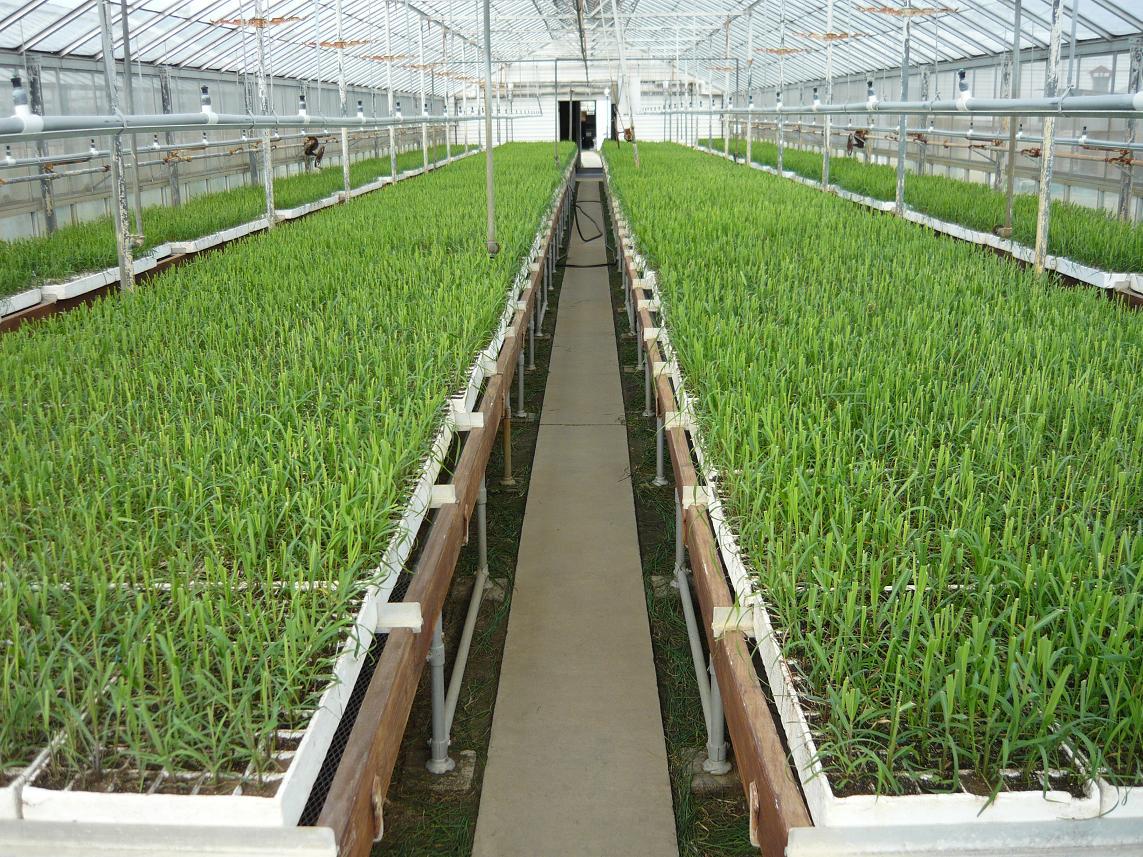
We have three greenhouses for seedling propagation, of which two are completely filled and one is partially filled with transplant seedlings thisyear.
POSTED BY BAYOUCANE
LABELS: SUGARCANE, USDA
Courtesy: Hadi Laghari
Incoming search terms:
- sugarcane seedlings
 Author: admin


