


 RSS Feed
 Email
 Twitter
 Facebook
Declining exports of basmati rice
 Twitter
 Facebook
 Delicious
 Digg
 Stumble
 Reddit
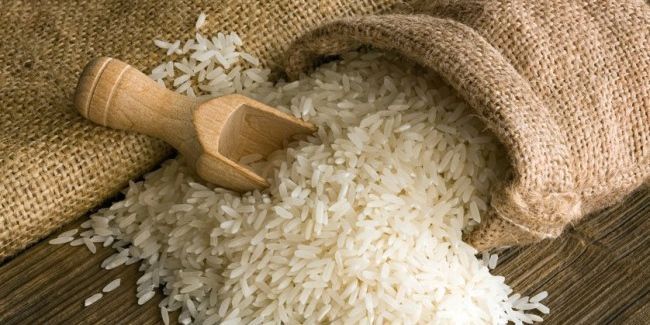 The domestic market is overwhelmed with a basmati rice glut; the government is stuck with bigger issues of national economy and security and is unable to help stabilise the rice trade; and the prices are sliding. The farmers’ panic, therefore, is understandable.
The basmati variety is currently being traded at around Rs3,000 per maund, against Rs4,500 last year. More importantly, the quantum of trade is low. With production at the same level and exports receding over the last four years, the country now is estimated to have around 1m tonnes of stock though the actual figures is not known as the stocks are spread over the entire supply and trade chains.
Firstly, till 2011, exports were over 1m tonnes and domestic stocks were emptied each year. From then onwards, exports started dropping for a number of reasons that have been pointed out in the media. In 2012, foreign sales dropped to 968,941 tonnes. Next year, they went down to 630,035 tonnes, leaving a domestic glut of around 350,000 tonnes. Last year, they sustained the trend and touched 733,860 tonnes, adding over 250,000 tonnes to the glut. Till last season, the country was holding a carry-over of 600,000 tonnes. This season might add at least another 400,000 tonnes, taking the total tally beyond 1m tonnes.Similarly, the price has gone down by 33pc from last year.
The main question now facing the market is how to clear the trade surplus. If it remains in the country, it is big enough to rig the domestic and export markets for some years to come, till it is either sent out or domestic crop fails to eat it away. One certainly cannot wait for the domestic crop to fail; thus, the only option left with the farmers and, more importantly, with the government, is to somehow clear it, even if it costs some money in shape of subsidies. The region has big buyers like Saudi Arabia, Iran and Iraq, all of which import just under 1m tonnes of rice each year, mostly from India. The market is there, if Pakistan can somehow capture it
The exporters don’t have the capacity, or will or incentive to clear such a huge stock.They used to export over 1m tonnes but then lost a major portion of it to Indian competitors. Currently, their exporting capacity is down to 600,000 tonnes, which itself now seems to be an impossible task given the international scenario. Luckily, the region has some big buyers like Saudi Arabia, Iran and Iraq — all of whom import just under 1m tonnes of rice each year, mostly from India. This shows that the market is there, if Pakistan can somehow capture it. The ministries of food security and research, finance and commerce need to put their heads together and see how the local glut can be cleared through bilateral or even barter agreements.
The federal government also needs to step in because it announced compensation package of Rs5bn for basmati growers after last year’s floods, but seems to have forgotten it. None of the basmati growers have received the promised Rs5,000 per acre, and they have been left to suffer the brunt, both of a reduction in yields and a massive reduction in price. The same money can be used to ensure exports. Besides, the provincial governments, who now fully own the sector and proudly announce achieving their production targets, also need to improve their marketing activities. This dichotomy needs to be taken care of, where provinces ensure production but are unwilling to play a role in marketing them.
Punjab, which is the only producer of basmati, is not willing to help clear the glut, and has left the trade to players it has no control over. These issues must be solved through mutual cooperation, understanding and policy development, involving all stakeholders. The basmati variety that fetches almost three times higher price as compared to other coarse varieties is too important to be left to lesser players. Even in the current recession, basmati is being traded in the international market at $900-1,000 per tonne, against $300-350 per tonne for coarse varieties.
This basmati variety also has a huge role to play in poverty alleviation in rural Pakistan. Being mainly an export variety (with 60pc of its production going overseas at one time), it also fetches precious foreign exchange. All these factors make it too important for social and economic reasons to be left too inefficient market forces.
Dawn