


 RSS Feed
 Email
 Twitter
 Facebook
Commercial dynamics of renewable energy
 Twitter
 Facebook
 Delicious
 Digg
 Stumble
 Reddit
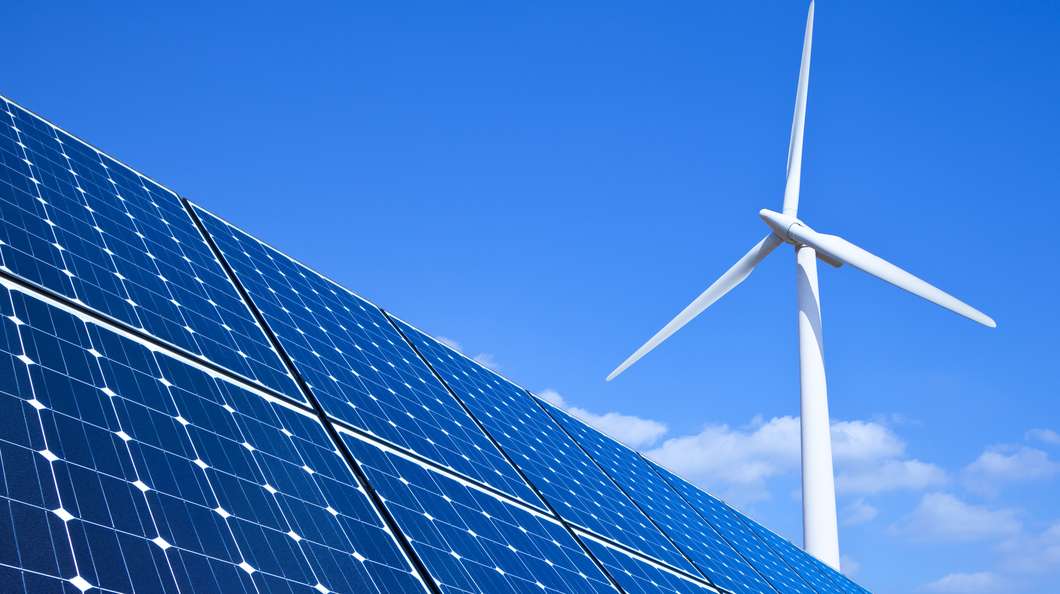 OVER the years, renewable energy has gained substantial traction and now contributes more than 20pc to the electricity generation worldwide.
In 2013, 120GW of renewable electricity generation capacity was added internationally with solar capacity exceeding wind for the first time.
Major reductions in technological costs, climate change issues, government support and incentives, oil and gas price volatility and potential for liability for green house gas emissions have been at the forefront of the move towards renewable energy along with massive public support for solar, wind and hydro. The movement has even compelled some oil majors such as BP and Statoil to invest in renewable energy both onshore and offshore, however, not all are convinced of joining the green energy movement.
This is happening in a market environment where the whole paradigm of ‘ Peak Oil and Gas’, has been made questionable with the development of unconventional hydrocarbon resources. Smaller countries such as Iceland and Norway now generate all their electricity through renewable sources while others including Germany want 80pc green electricity by 2050.
However, whether renewables make economic and technical sense for Pakistan, the world’s 6th most populous country in the world, is another story and needs serious consideration in view of our perennial power shortages and transmission losses. At peak summer electricity demand, we are regularly short of about 5,000 MW generation capacity, which is a substantial amount per se.
Hydro, solar and wind are resources that are in abundant supply in Pakistan and should play a significant role in the electricity mix, albeit in view of certain very strategic considerations.
The reality is that costs, especially for solar power, have gone down by 50pc over the last four years and this reduction should be reflected in local allocated tariffs.
Renewables, especially solar and wind power, have issues of reliability, intermittent supply variation, cost and equipment specifications which need to be carefully considered based on geographical location and environment of the proposed solar and wind farm locations in Pakistan.
Furthermore, the ability of the national grid to adapt to major supply of solar and wind power also needs to be considered along with the effect of higher solar and wind tariffs on overall electricity costs to the population.
Since we are a perennially electricity deficient country needing base loads rather than peaking loads, we also need to carefully determine the share and timelines of adding renewables to the national grid with the exception of perhaps utility scale hydro projects.
It is pertinent to mention here that solutions to electricity generation variability and related issues as mentioned above are being constantly improved, however, their adaptability to Pakistan is questionable given our infrastructure and demand supply profile.A lot of ground has to be covered before we are able to develop a diversified matrix of renewable energies with intelligent technologies and smart grids to manage both base and peak loads.
Hydroelectricity is arguably the cheapest source of electricity worldwide, however, all countries are not blessed with a river system such as Pakistan’s. In 1985, a not too-distant past, Pakistan generated almost 67pc of its electricity through hydro and was, by default, a great follower and proponent of renewable energy. This share has now dropped to 30pc as the country’s focus moved away from cheap hydro to relatively expensive fossil fuel based electricity generation.
On a positive note, we are now again focusing on hydropower development with a number of utility scale and smaller projects in the pipeline including Suki Kinari 870MW, Azad Pattan 640MW, Karot 720MW, which is being developed by China Three Gorges International. These would be very welcome additions to the national grid while providing affordable energy to the country. The levelised tariff that has been approved for these plants ranges from $0.053 – $0.088/kwh which is quite reasonable.
This needs to be seen in contrast to the levelised tariff of $0.14-0.15/kwh approved by Nepra for solar projects, with higher tariffs for the initial 10 years. The difference in tariff, for lack of details, could primarily be due to higher Pakistan-specific costs.
But international comparison is rather stark with competitive solar power now being generated at $0.08/kwh without subsidies. The overall 5GW solar project by DEWA Dubai was recently bid at $ 0.0585/kwh for second round. However, interestingly the third phase of this project was bid at $0.0299/kwh. Solar power has had many false dawns and one needs to see this through.
Pakistan has wind potential of 50,000 MW with quite a few sweet spots for wind power. However, offshore areas present a much higher wind potential as compared to onshore. Wind power is contributing a miniscule 0.25pcof total electricity generated and the ratio needs to be enhanced significantly.
Internationally, low cost onshore wind power is now being developed at $0.05/kwh whereas, the levelised tariff now allowed in Pakistan is $0.13/kwh.
As renewable power projects normally have a range of cost profiles which are dependent on resource quality, equipment cost and performance, capacity factors, operational and maintenance costs, economic life, regulation, capital costs and discounting factors, a comparison with international norms would require a detailed study of project dynamics
Having said this, the reality is that costs, especially for solar power, have gone down by 50pc over the last four years and this reduction should be reflected in local allocated tariffs.
Given the above scenario, technology cost reductions and economic dynamics, the following steps should be undertaken to adequately develop the renewable energy sector:
The Renewable Energy Policy 2006 needs to be reviewed in view of changed market dynamics and costs. The policy provides for zero risk to investor on account of variation in wind speeds and hydrological flows and a rather generous 17pc return on equity ( ROE) on wind projects.
The investor is compensated for resource quality risk leading to a higher tariff for local consumption. This needs to be revised in view of international best practices as the industry has graduated from subsidies and government incentive schemes.
Source: Dawn