

Boosting export of kinnow & mango to EU: exporters asked to comply with international standards
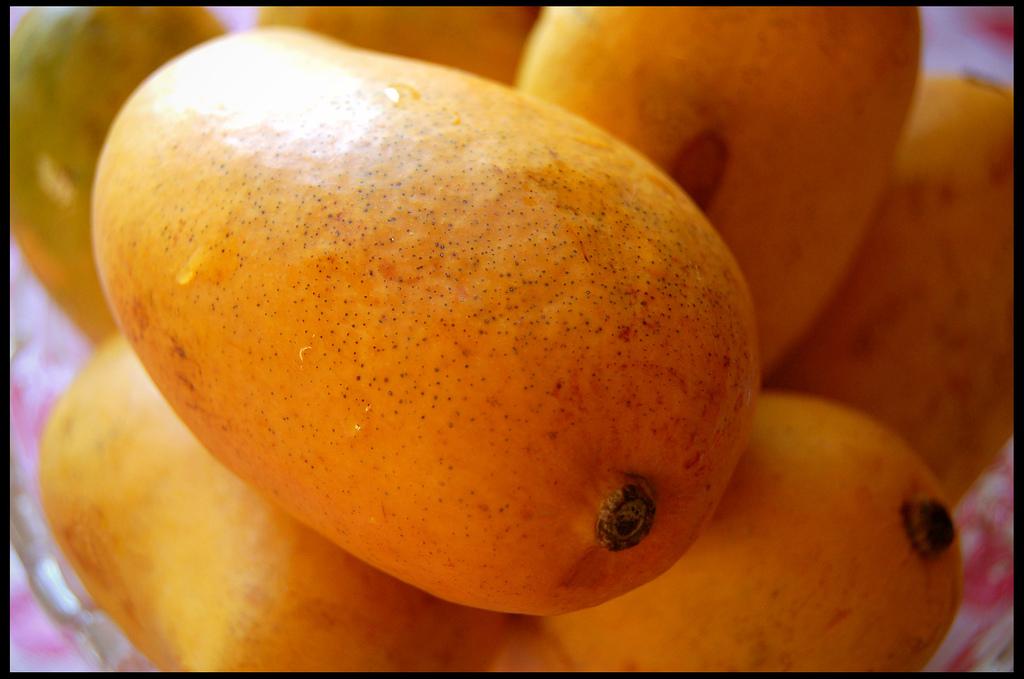 Chief Technical Advisor, Trade-Related Technical Assistance Programme (TRTA-II), Bruno Valanzuolo, has warned that yellow cards have already been shown to Pakistani exporters for non-compliance on international standards which might result in a red card, bringing a complete ban on the export of kinnow and mango from Pakistan to the European Union’s countries.
Speaking at an EU-funded Public Private Dialogue (PPD) on ‘Enhancing Competitiveness and Exports of Kinnow and Mango’, organised at a local hotel on Tuesday by International Trade Center (ITC) in association with Karachi Chamber of Commerce and Industry (KCCI), United Nations Industrial Development, he advised Pakistan exporters to reform and adhere to international standards to give a boost to the export of Pakistan’s kinnow and mango in European countries.
He mentioned that due to non-compliance of sanitary issues and other international standards, large numbers of mango and kinnow consignments were being rejected, each year, and Pakistan’s exports of these commodities continued to decline. Voicing serious concern over EU warnings that might result in complete ban on Pakistani kinnow and mango exports to the EU countries, KCCI President Abdullah Zaki, said that need of the hour was that private sector, government organisations and all other stakeholders must join hands and work jointly to address the challenges being confronted by the horticulture sector, in general, and kinnow and mango, in particular.
Confident about Pakistan’s potential of generating all kinds of food commodities, he said that apart from being counted as one of the major cotton and sugarcane producing country, Pakistan ranked as one of the largest citrus and mango-producing country in the world. He said that availability of Pakistan’s citrus at a reasonably low price in the world markets had helped the country export more than 305,000 tons of kinnow amounting to $180 million in financial year 2014. Last year, Pakistan exported 235,000 tons of kinnow worth $140 million.
He pointed out that the main disadvantage that Pakistani kinnow faced in the international market was the presence of seeds in it. It has to compete with seedless citrus like mandarin and clementine from Spain, Morocco, Argentina and South Africa. He further mentioned that Pakistani is the sixth largest producer of mangoes after India, China, Mexico, Indonesia and Thailand with production accumulating to around 1.8 million tons a year. Pakistan’s mango sector represented four percent of the world’s total production and contributed approximately $150 million per year to the country’s GDP, he added.
“However, it is quite unfortunate that Pakistan’s mango industry is still not well-developed. The country exported 140,000 tons in FY13, which is only eight percent of its production, while up to 30 percent, is wasted due to multiple reasons, ranging from primitive agricultural techniques to lack of adequate processing and storage facilities”, he added.
He appreciated the efforts being made by ITC, PITAD in collaboration with the European Union towards disseminating TRTA II, exclusively for Pakistan. He hoped that mutual co-operation would grow further to facilitate business community by holding similar public private dialogue on enhancing competitiveness in all fields. Secretary TDAP, Rabiya Javeri Agha, highlighted the positive role of PITAD in steering the TRTA-II programme. She informed that TDAP was in contact with the Quarantine Department to establish a VHT plant.
She said that export of mango from India has been banned by the EU, thereby providing an opportunity to Pakistan to increase its exports or face the same destiny by not reforming and adhering to international standards. She stressed the need for reforms in order to avoid ban by the EU.
Highlighting his association with TRTA-II programme, DG PITAD, Sajid Hussain, informed that eight PPDs, in association with ITC, have been conducted, so far, to make contribution to the policies of the government. The ITC’s Programme Officer, Mohammad Owais Khan, said that a public-private dialogue steering committee has been set up with the approval of Ministry of Commerce which steered the process of PPDs and attendant policy research. He urged the stakeholders to come up with their recommendations for policy reform and actively participate in the dialogue so as to address the real issues.
Business Recorder
Related articles across the web
 Author: admin


