


 RSS Feed
 Email
 Twitter
 Facebook
American bollworm attack on BT cotton: FAP urges government to form expert committee
 Twitter
 Facebook
 Delicious
 Digg
 Stumble
 Reddit
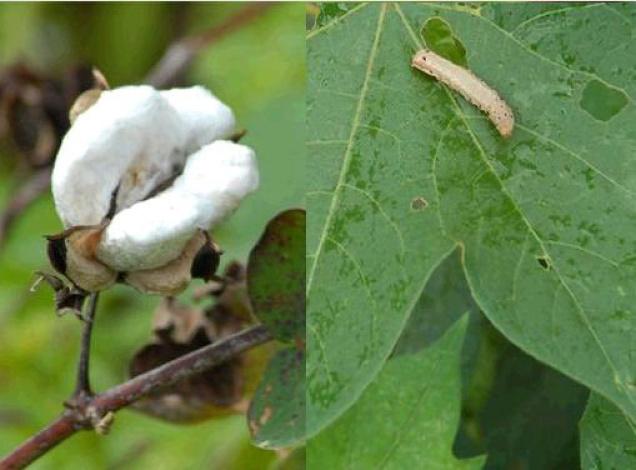 Farmers Associates Pakistan (FAP) has urged the government to constitute an ‘expert committee’ to look in to the reported attack of American Boll Worm on BT cotton varieties to examine the severity of the threat, reasons and tackling the issue from ruining this important cash crop.
It also urged the government to ascertain how uncertified BT seeds came in to the country and is there any standards or regulations exist for such seeds. It said that this issue is more of governance than of legislation. If it is not addressed right now it can be a big threat in the future for a crop, which is most important for not only the agriculture but the national economy.
It also urged that the expert committee should also have representatives from farmers’ organisations besides agricultural scientists and experts. This demand was raised at a meeting convened by the FAP to introduce its newly elected executive committee members and discuss issues like American Boll Worm attack on cotton, MFN status to India and Agriculture Tax by the Punjab and Federal government, water situation and others.
FAP Chairman Shah Mahmood Qureshi floating this proposal said that for the last two years majority of the growers had shifted to BT cotton seeds as besides more yield it also helped dealing boll worm threats. ‘We just had to deal with sucking pests free of any threat of boll work attack but this year this pest is being reported in the crop,’ said Qureshi.
He said besides constituting expert committee, the government should also look in to the matter that seed certification department which had been shifted to provinces after the passage of 18th amendment, whether or not the provincial governments had the capacity and technical infrastructure to play their role in this regard. He said if we have a draft regulation in Punjab in this regard than it should be implemented earliest. He said it can be done through an ordinance also.
The meeting also discussed at length prospects of giving MFN status to India and demanded that the government should keep agriculture separate of this agreement due to various factors including heavy subsidies being extended by India to its growers. Qureshi said that India was giving around $100 billion subsidy to its growers, so how farmers of Pakistan could compete with their Indian counterparts in this regard. He said that farmers’ representatives should also be given place in the standing committee of the Ministry of Commerce while taking any decision in this regard.
Qureshi also urged the growers to take a position on this issue discussing all the negative and positive impacts of MFN to India. Earlier, in his opening remarks, Shah Mahmood Qureshi urged the farmers present in provincial and federal assemblies should rise above party affiliations and voice for the protection of rights of the growers.
He said that the federal finance minister had talked about achieving 7 per cent growth rate in next two years and it is not possible without the support from agriculture sector.
However, he expressed his fear that the government in recent loan agreement had accepted the demand of devaluing rupee and waiving difference between the production costs and selling cost of electricity in next two years. He was of the view that both these factors will add to the input cost for this sector. Regarding water issue, he said that it would be biggest problem in the time to come. ‘Though PML-N had government in center and Punjab and also in favour of construction of Kalabagh Dam but it will not be able to take any solid decision in this regard,’ Qureshi predicted.
FAP President Dr Tariq Bucha informed the meeting on this regard that FAP is being represented in Pakistan India Joint Business Council (PIJBC) and strongly voicing its concern regarding negative impact of MFN status to India without considering different factors.
He said that they had also met Prime Minister Nawaz Sharif and he was happy to note that both sides are talking to each other and said dialogues can solve the issues. He also said that they were working on a presentation highlighting issues being faced by the agriculture in Punjab which would be given to the Chief Minister in next few days. Others who took part in the discussion included Hamid Malhi, Javed Qureshi, Farooq Bajwa, Hussain Jehanian Gardezi and Afaq Tiwana.
Javed Qureshi also threw light on non-tariff barriers being used by India against Pakistani agriculturists. He said Pakistani growers cannot be competitive with their Indian counterparts as Indians are being subsidised to the tune of US 100 billion dollars per annum while in Pakistan’s case subsidy to agriculture sector is negligible. He also said that out of the total seeds of different crops available in the country, only 20 per cent are certified.
Business Recorder