


 RSS Feed
 Email
 Twitter
 Facebook
Plan to impose GST on processed milk disastrous: Dr Salman Shah
 Twitter
 Facebook
 Delicious
 Digg
 Stumble
 Reddit
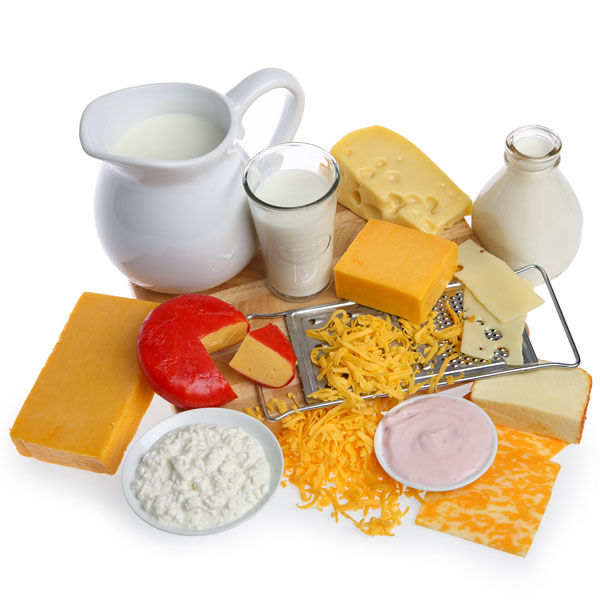 LAHORE: Former finance minister and Dairy and Rural Development Foundation (DRDF) Chairman Dr Salman Shah has said that the government’s plan to implement general sales tax (GST) on processed dairy product would negatively impact the livestock sector’s contribution to the gross domestic product (GDP), which is currently at 11 percent because the farmers would shift to other agricultural products.
In Pakistan 95-96 milk markets are based on unprocessed milk while only four to five are processed ones. The government is deciding to tax this four to five milk markets industry, which is unfair and unjustified because the size of this industry is very small and such a step would hinder the growth of this sector.
Daily Times: Would it also impact the price of unprocessed milk in the market?
Salman Shah: Obviously, the demand of processed milk will increase because of price increase of processed milk and resultantly Gwala would also increase the milk price. The government wants to collect revenue however, if such a decision is implemented this would result in a loss for the government because it would have to invest more money on its health budget because the increase in use of unprocessed milk mean chances of increase in diseases in the country. This would be an unfair hurdle in the growth of processed milk industry.
DT: What is the DRDF and how is it contributing to Pakistan’s dairy and livestock sector?
SS: As the name suggests it’s the rural development through the development of dairy. Farmers’ income comprises of two main things, agriculture and livestock incomes. Agriculture contributes 22 percent to the GDP of Pakistan out of which exactly half 11 percent is shared by the livestock sector. The DRDF was established in 1996 with the vision to ensure rural development through promotion of dairy. I joined this foundation two years ago.
DT: So, what are the primary targets of the three-year DRDF-Dairy Project - and how will it impact Pakistan’s dairy sector?
SS: Now the idea is to focus on the dairy sector and increase the income of farmers so that they are in a position to multiply their investment for the further growth of the industry. In Pakistan the total population of big animals is 62 million comprising 32 million cows and 30 million buffaloes. The number of goats and sheep is 38 million. At the moment we are focusing on large 62 million animals. DRDF reviewed that our animals average yield is around 1,000-1,500 litres milk per annum. We have fixed a target to increase it to 4,000-4,500 litres milk per annum by providing better breed, better fodder and efficient media treatment of the animals. The price of milk at farm level is on the average at Rs 40 and one cow gives annual 1,500 litres milk then the yearly income from one animal is around Rs 60,000. If the milk production would increase to 4,500 it means three times increase in the income of farmers.
DT: What are some of the key challenges being faced by Pakistan’s dairy sector, and is there a large potential for growth and improvement of economic livelihoods associated with this sector?
SS: To improve breed in Pakistan is a challenge because there are only 5.0 percent good breed in the country including that of Sahiwal and Cholistan however their milk yield is also not more than 2,000 litres milk. In comparison American cows are giving 9,000 litres milk and the Israel’s cows are giving up to 12,000 litres milk per year. Pakistani breed can be improved through artificial insemination. At this moment our focus is South Punjab however ultimately we would cover whole Pakistan including Khyber Pakhtunkhwa, FATA and Balochistan. Our target is to train 2,000 artificial insemination technicians (AITs) with one month training and three months on job training. We are also training 500 women animals nurses to look after the animals and provide them treatment in case of any ailment keeping in the view our culture as mostly females take care of animals at home in Punjab. In addition we are also providing dairy farming training to 9,000 farmers besides imparting practical training to 100 farm managers. We are also producing village level communities and proper communication strategies to make this realise in practical manner. Efforts are also being made to help provide soft loans and micro-finance to farmers and get them manage 50-100 animals farms. We are also coordinating with universities, milk processing units and semen suppliers as well as an awareness campaign for the villagers, farmers and prospective farmers.
DT: What are some of the economic policies the new government must adopt in order to make it a more conducive environment for Pakistan’s dairy sector to blossom?
SS: There are two big markets of big animals like milk production and meat while leather is also a byproduct. At the moment the laws on the quality of milk and meat are very weak and the government needs to focus on this aspect for the sake of the health of the nation. We have to push this market towards modernisation and ensure quality product. For this we need a dairy industry framework. Also to support this industry there should be no duty on import of fodder and milk processing machines and other dairy equipment. Milk is a basic need of every household and the government must provide support so that quality milk is available at affordable price. The government should launch programmes like Milk in School to meet the nutritional demands of the children because our population is mostly young and milk is one of the main requirements of food.
DT: Do you think the government is in position to implement such a plan?
SS: Yes, it must be implemented in Pakistan by an elected democratic government because it is a silent benefit as it is the right of our people to have access to quality and germ-free milk.
DT: How can small-scale farmers channelise their strength to fulfil the increasing milk demand in Pakistan? Will the imposition of GST have an impact on profit margins?
SS: We are making efforts for availability of micro-finance and help established 50-100 animal farms and we are also providing practical training in this regard. The GST would discourage and they would shift to other businesses.
DT: How has the energy crisis affected Pakistan’s dairy sector?
SS: It has badly affected the cool chain from farmer to the consumer. Cool chain is very important to preserve the milk however due to massive load shedding in the country a large quantity of milk is wasted. In DRDF we are going to launch biogas chiller, which would be run on the basis of available animal wasted there.
DT: How can Pakistan’s dairy sector maximise its potential as a milk exporter and place itself on the international map as a competent player?
SS: Changing our traditional low quality breed with the good quality, provision of best quality fodder and good environment to the animals, and by enhancing shelf life the dairy sector can maximise its potential. The milk of buffalo is considered very good for children in the world. It’s available in Pakistan and exporters can market it. We need to exploit the market of powder milk because keeping in view the large population of milk animals in Pakistan our next step could be powder milk. DRDF wants Pakistan to become a major player in the dairy sector during the next 15-20 years.
Daily Times
Incoming search terms:
- is tax suggested on dairy products in pakistan budget 11 jun 2013
- milk prices in budget 2013-14 pakistan
- salman shah and dairy and rural